Beyond the blinking red light: confessions from the trenches of corporate AV
AV is 20% technology and 80% construction management. EDID handshakes, lobe tracking, and why the vent above your ceiling mic will ruin your day.

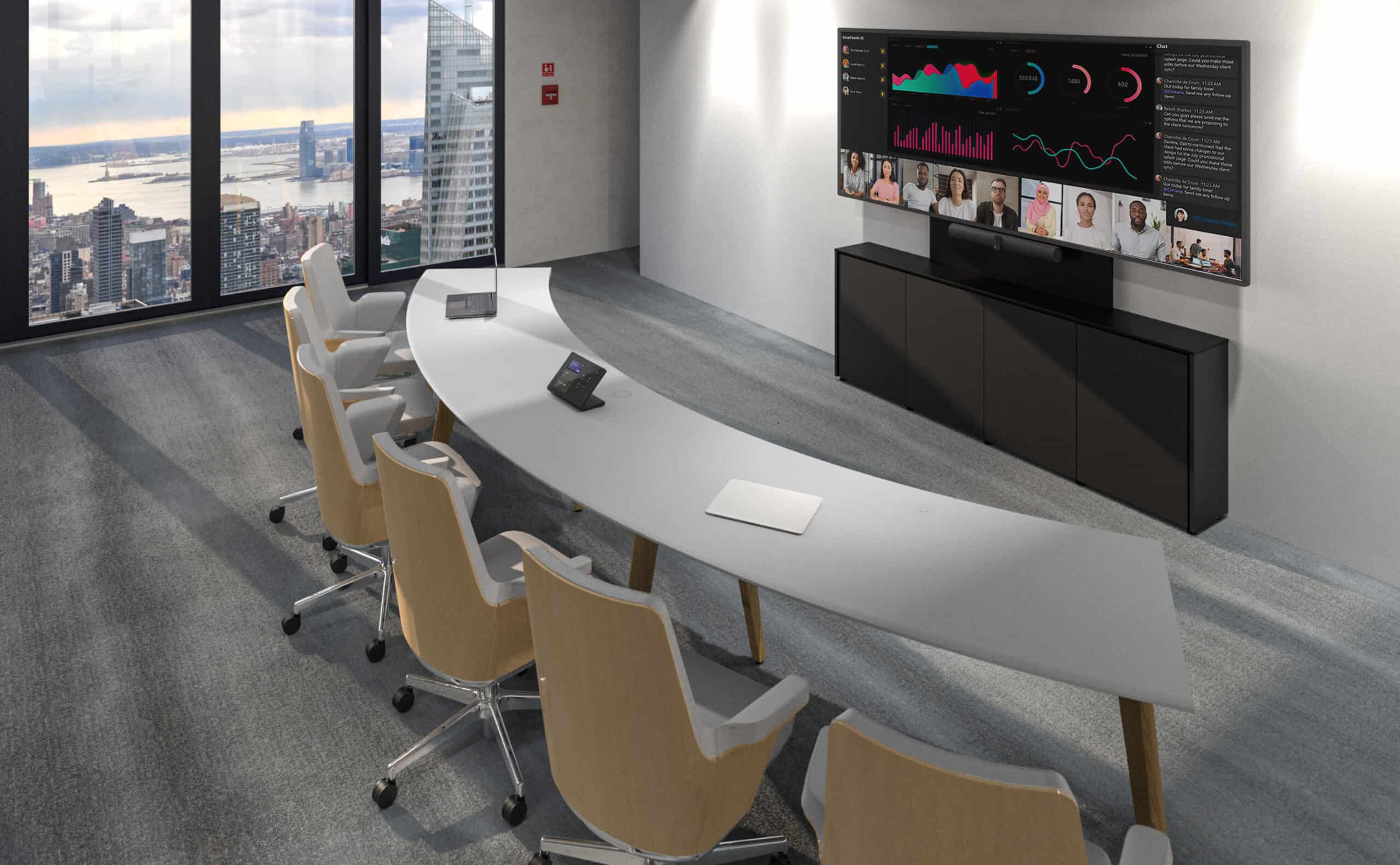
Picture this: it's 8:55 AM. The CEO is about to pitch a multi-million-dollar acquisition to a board of directors sitting in a room three time zones away. The dual 86-inch displays are mounted. The acoustic ceiling tiles are perfectly aligned. The room smells faintly of new carpet and expensive coffee.
Then, the touch panel blinks red. "No Signal."
If your heart just spiked, you're either an executive who has lived through this nightmare, or you're an audio visual specialist like me. For the rest of the world, AV is just "plugging a TV into a wall." For those of us in the trenches, it's a high-stakes ballet of physics, software, construction, and sheer willpower.
Grab a coffee. Let's talk about what it actually takes to build the modern collaborative space, and why making things look "effortless" is the hardest job in the tech world.
The Ecosystem Wars: MTR, Zoom, and the Firmware Purgatory
Let's start with the brain of the room. Microsoft Teams Rooms (MTR) and Zoom Rooms have completely changed the game, but they've also started a quiet religious war in corporate IT.
I've deployed hundreds of rooms using Yealink and HP Poly hardware. On paper, it's simple: mount the soundbar, plug in the touch console, connect the compute unit, and log in. In reality? You are at the mercy of the cloud. I've spent more hours of my life watching Poly and Yealink firmware progress bars crawl across a screen than I care to admit.
The trick isn't just getting the hardware to work; it's getting it to play nice with the client's specific network topology. Yealink's MVC systems are fantastic for their modularity, while HP Poly's Studio bars bring incredible out-of-the-box audio tracking. But the real expertise lies in the backend — configuring the XML files, managing the MTR admin center, setting up proximity joins, and ensuring that when a user walks in with their laptop, the Bluetooth beacon actually triggers the room wake-up instead of connecting to the guy's phone in the hallway next door.
The Dark Arts: EDID, Adapters, and the "Ghost in the Machine"
If you want to see an AV veteran twitch, just whisper the word EDID.
Extended Display Identification Data is the handshake protocol between a source (like your MTR compute unit) and a display. It's supposed to tell the computer, "Hey, I'm a 4K screen, send me 4K." But sometimes, the display lies. Or the 50-foot fiber optic cable drops a packet. Or the $12 adapter you bought online decides to identify the 98-inch interactive touch display as a 1080p CRT monitor from 2006.
Troubleshooting EDID and HDMI handshakes is where the real detectives live. You learn to carry an Extron EDID 101D emulator in your bag like a talisman. You learn that not all "4K certified" cables are created equal, and that a slightly bent pin on a DisplayPort connector can cause a video wall to flicker every exactly 43 seconds.
Speaking of video walls — building a 2x2 or 3x3 LCD video wall is an exercise in extreme patience. It's not just about hanging heavy screens. It's about bezel compensation, color calibration, and ensuring the Extron scaling processor is feeding the exact right resolution to each panel so the CEO's face doesn't look like it's been sliced in half by a millimeter-wide black bezel.
Audio: Where the Real Magic (and Blame) Happens
Here's a hard truth: people will forgive a slightly pixelated video feed. They will never forgive bad audio. If they can't hear you, the meeting is dead.
Designing audio for modern "glass fishbowl" conference rooms is a massive challenge. Glass reflects sound. Hard tables reflect sound. Without intervention, your room will sound like you're shouting inside a tin can.
This is where heavy-hitting DSP (Digital Signal Processing) and top-tier hardware come in. I've tuned rooms using Yamaha's A20 and Extron's DTP CrossPoint matrixes, but the magic really happens at the edge with the microphones and speakers.
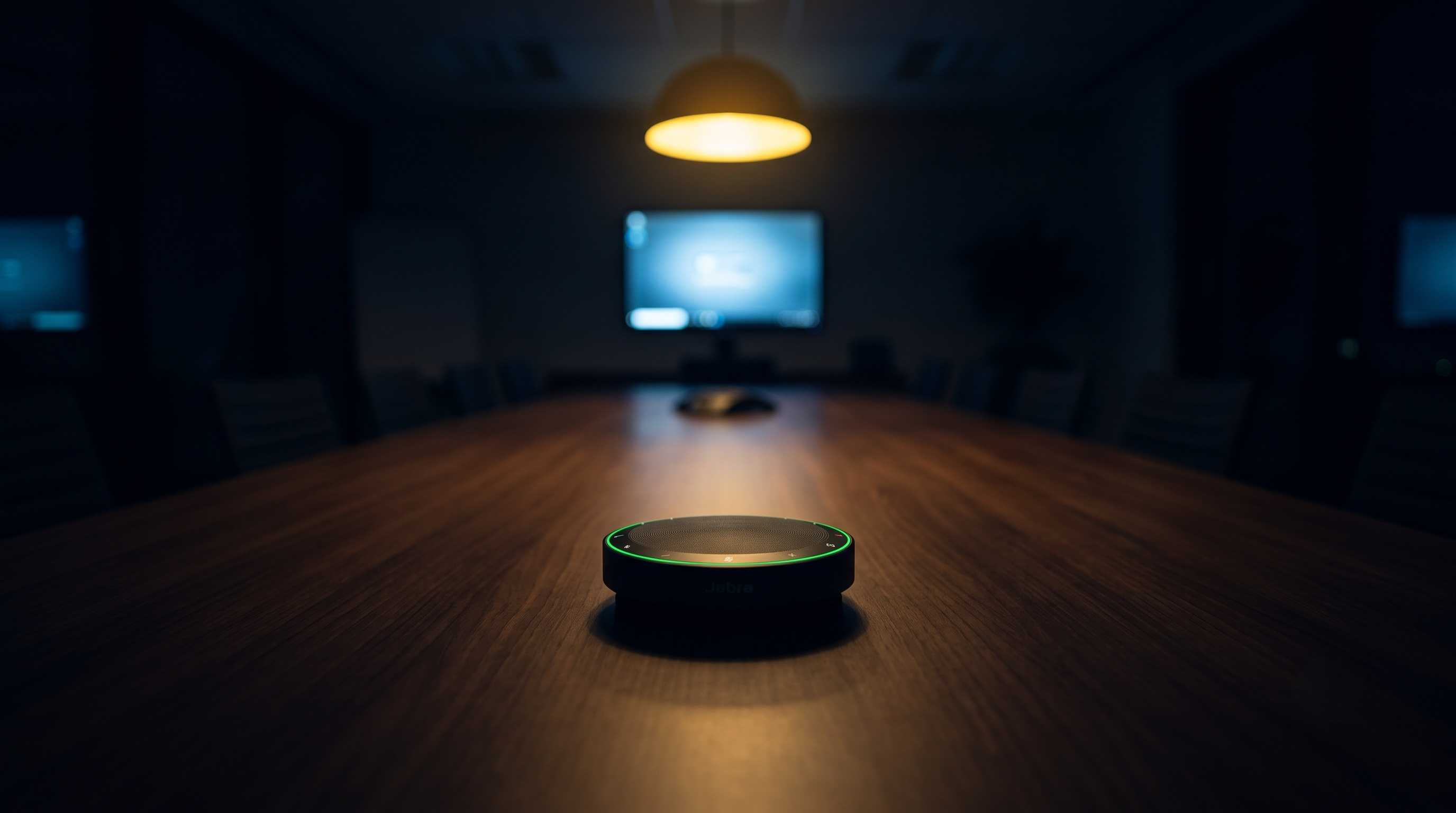
Deploying Shure's ecosystem — like the MXA910 ceiling arrays or the Stem ecosystem and their P-series processors — requires a completely different mindset than just slapping a puck mic on a table. You have to map the room. You have to draw the coverage zones in the software, physically walk the room with a laptop to test the lobe tracking, and aggressively tune the echo cancellation (AEC).
And let's not forget the amplification. Matching an Extron XPA amplifier to the right ceiling speakers, like Extron's SF series, requires understanding impedance and wattage. You want the audio to be present and intelligible, not so loud that it triggers the acoustic echo canceller and makes the remote participants hear their own voices bouncing back at them. It's a delicate, beautiful science.
The Contractor Ballet: Managing the Physical Build
Here is the part they don't teach you in AV certification courses: AV is 20% technology and 80% construction management.
You can design the most beautiful Zoom Room in AutoCAD, but if you can't manage the pool of contractors on the job site, your design is just a pretty piece of paper. I manage the physical build, which means I have to speak fluent Electrician, Drywaller, and IT Admin.
The sequence of trades is everything. If the drywallers close up the walls before my low-voltage guys have pulled the conduit and the Cat6A, we're tearing down drywall. If the painters come in before the displays are mounted, we're dealing with touch-ups. If the HVAC guys put a massive air return vent directly above the ceiling microphone array, your multi-thousand-dollar Shure mic is just going to pick up the sound of rushing wind.
I've learned to be the conductor of this chaotic orchestra.
- Soundproofing. I work with acoustic specialists to ensure the room has the right STC (Sound Transmission Class) rating. We use mass-loaded vinyl, acoustic seals on the doors, and decoupled walls so the sales team's loud celebrations don't bleed into the boardroom.
- Electrical. I coordinate with electricians to ensure we have dedicated, clean 20-amp circuits for the AV racks. Nothing kills an Extron video processor faster than a voltage spike from the coffee maker plugged into the same circuit.
- Cabling and patching. There is a profound, quiet satisfaction in opening an AV rack at the end of a project and seeing perfectly laced, velcro-tied — never zip-tied, never — labeled cabling. It's the hallmark of a professional. It tells the next tech who has to service this room: "I respect you, and I respect my craft."
The Human Element
At the end of the day, all this technology — the MTRs, the Yealink bars, the Extron switchers, the Shure mics — is just metal, plastic, and silicon. The real purpose of what we do is human connection.
We build these spaces so a mother can see her team's faces when she closes a massive deal. So a surgeon can consult with a specialist across the country in real time. So a global team can brainstorm on a digital whiteboard without the lag dropping their train of thought.
When a project wraps up, there's a specific ritual I do. The contractors are gone. The drywall dust is vacuumed. The rack is locked. I walk into the room, close the heavy, acoustically sealed door, and listen to the silence. I tap the touch panel. The screens wake up in perfect unison. The camera smoothly pans to the center of the table. The audio meter dances when I speak.
It works. Flawlessly.
Then, I pack up my laptop, grab my gear, and head to the next site. Because somewhere out there, another touch panel is blinking red, and it's waiting for me to fix it.